
Small-aperture welded wire mesh is a flexible grid supplied in roll form. It uses straight horizontal and vertical wires joined at each intersection, creating regular square openings that differ from diamond-pattern chain link, twisted hexagonal poultry netting, and woven wire cloth. For poultry runs, bird-control screens, small-animal housing, or light enclosure work, buyers should specify the mesh as part of the installed boundary: opening, wire diameter, finished height, support frame, fixing arrangement, ground treatment, and intended animal or pest-control requirement.
The opening alone does not determine whether an enclosure is suitable. The relevant animal, its age and size, any expected wildlife pressure, the condition of the existing structure, local welfare requirements, and the planned installation all need review. A small opening may be appropriate for one application and unsuitable for another. Provide the site use and desired enclosure function in the RFQ so the mesh construction can be evaluated against the actual project rather than a generic photograph.
What defines small-aperture welded mesh
Welded mesh is identified by the joined crossings of two straight wire directions. In a small-aperture roll, these crossings make a repeated square grid that can be cut and fixed to a frame while retaining a more orderly opening pattern than loosely twisted netting. The small-aperture welded wire mesh product page is the direct catalogue reference for this product format.
Ask for the nominal opening and wire diameter together. The opening affects access through the grid and visible density; wire diameter affects the weight, handling behaviour, rigidity between fixing points, and clear space within a nominal opening. State the required measurement units and any tolerance or inspection method that matters to the order. A request for “fine mesh” without those details cannot define a repeatable supply requirement.
Start with the enclosure use, not a stock roll size
For a poultry run, buyers should identify whether the mesh will be used on a timber frame, a steel frame, a roof section, an internal divider, a removable access panel, or a perimeter screen. The required mesh height and roll length follow the frame layout, bay dimensions, overlaps, and expected cutting allowance. If the enclosure has a door, hatch, ventilation opening, or service access point, list it separately because its mesh edge and fixing details may not match a standard straight run.
Small-animal and bird-control projects should identify the actual species or exclusion concern in the enquiry. Do not assume that one mesh configuration provides the same outcome for every animal or site. The enclosure design, secure fixing, gaps at doors and corners, below-ground detail where applicable, and maintenance condition all affect the completed system.
Compare welded square mesh with other fence forms
Square welded mesh, hexagonal wire netting, and chain link each have a different structure. Welded mesh has joined square crossings; hexagonal netting uses a twisted hex pattern; chain link is a flexible diamond fabric. The galvanized hexagonal wire mesh guide describes a separate poultry and garden mesh format. It should not be substituted for welded mesh without comparing opening, wire, framing method, and the application requirement.
For buyers reviewing several fence options, the wire mesh fence range provides related product forms. The final purchase order should identify the selected welded construction, material or finish, opening, wire diameter, roll dimensions, and the required quantity by roll size.
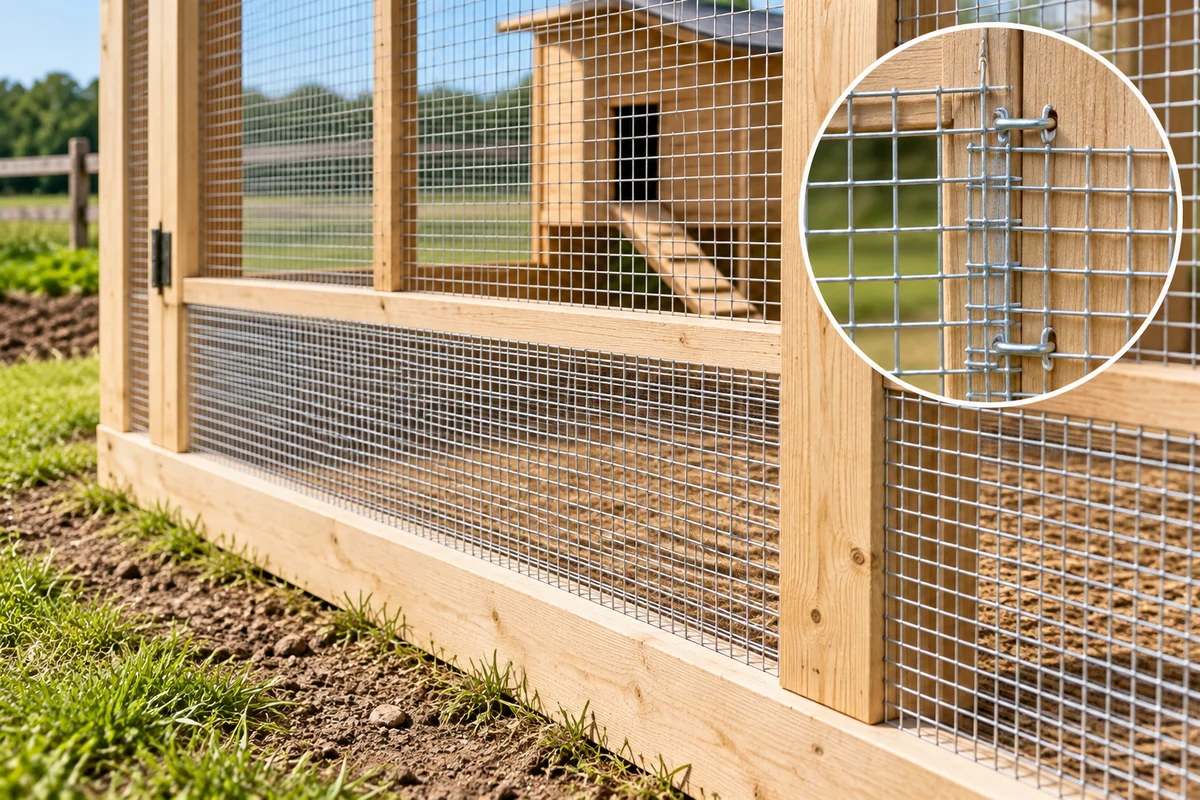
Plan the frame, edges, and fixing method
Mesh rolls are flexible, but a finished enclosure is only as reliable as its support and fixing method. Confirm the frame material, spacing of vertical members, the intended fastener type, and the distance between fixing points. Timber frames, steel frames, and pre-existing structures may need different clips, staples, screws with washers, or other agreed hardware. The final fixing method should suit the mesh, frame, and site conditions.
Pay particular attention to roll ends, cut edges, corners, and transitions around doors. These areas are where an undefined overlap or an incomplete fastening plan can leave unwanted openings. If the project includes a ground apron, buried edge, or a separate lower barrier, send a drawing or clear section sketch. Mesh supply should be quoted to the specified layout, while the project team remains responsible for confirming the enclosure design and local requirements.
Material, finish, and handling
For galvanized iron wire mesh, the specified finish should be confirmed before production together with the expected service environment. Exposure to moisture, cleaning practices, contact with treated timber, handling during installation, and storage conditions can all affect the appropriate material decision. Do not use a product title as a substitute for the purchaser's material and finish requirement.
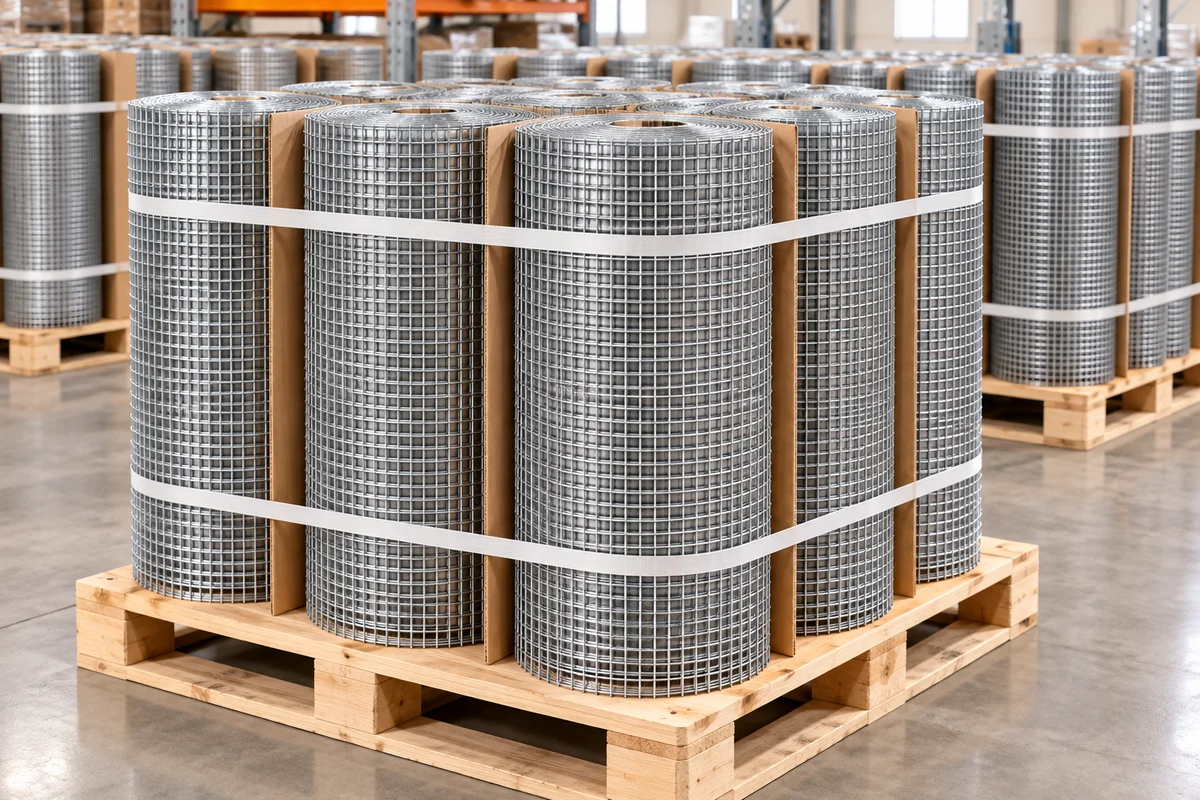
Roll width, roll length, roll weight, and cutting plan should be coordinated before shipping. A large roll may reduce joints on a long enclosure run, while a shorter or narrower roll may be easier for an installer to move and cut. State whether rolls will be unpacked manually, moved with equipment, or stored before installation. This helps determine packing, pallet arrangement, and the delivery plan.
Inspection and export packing
Inspection should follow the confirmed order. Typical points include welded construction, nominal opening, wire diameter, specified material or finish, roll width, roll length where agreed, edge condition, quantity, packing marks, and the overall appearance of each roll. Buyers who need pre-shipment evidence should request the agreed measurement photographs, roll photographs, packing list, and any inspection documents before the order is packed.
Export packing should keep rolls stable and identifiable during loading, transit, and receiving. Depending on roll dimensions, quantity, shipment mode, and destination handling, rolls may be bundled, separated with protective material, palletized, or otherwise prepared to the agreed loading plan. Mixed roll sizes should be clearly identified on the packing list so the receiving team can compare the shipment with the enclosure schedule.
RFQ checklist for small-aperture welded mesh rolls
- Application: poultry run, bird-control screen, small-animal enclosure, or another named project use.
- Required welded square construction, nominal opening, wire diameter, material, and finish requirement.
- Roll width, roll length, quantity by roll size, and the planned frame or fixing interface.
- Door, hatch, corner, roof, cut-edge, or ground-interface details that affect the mesh schedule.
- Requested inspection evidence, packing method, destination, and delivery preference.
Send the application, mesh specification, frame or layout information, roll dimensions, quantity, packing request, and destination through the Anping Mesh Factory contact page. A complete RFQ allows the quotation to address the actual enclosure requirement instead of an assumed roll configuration.