
Galvanized hexagonal wire mesh is a flexible twisted wire netting supplied in rolls. Its six-sided opening gives the material a different form from square welded mesh, chain link fabric, or a rigid metal panel. For light garden enclosures, poultry areas, tree guards, and similar containment or protection work, the value of the roll is not only that it can cover a long run. It can also be cut, formed around posts or planting areas, overlapped at a seam, and installed to follow straightforward site shapes.
The correct product still depends on the application. A mesh roll that is suitable for a low garden boundary may not be appropriate for a larger enclosure, a high-pressure barrier, a security perimeter, or a project with an engineer-defined fence system. A clear request should therefore identify the intended use and then confirm the opening, wire diameter, roll dimensions, galvanized finish, edge condition, quantity, packing, and destination before production is arranged.
Start with the hexagonal mesh structure
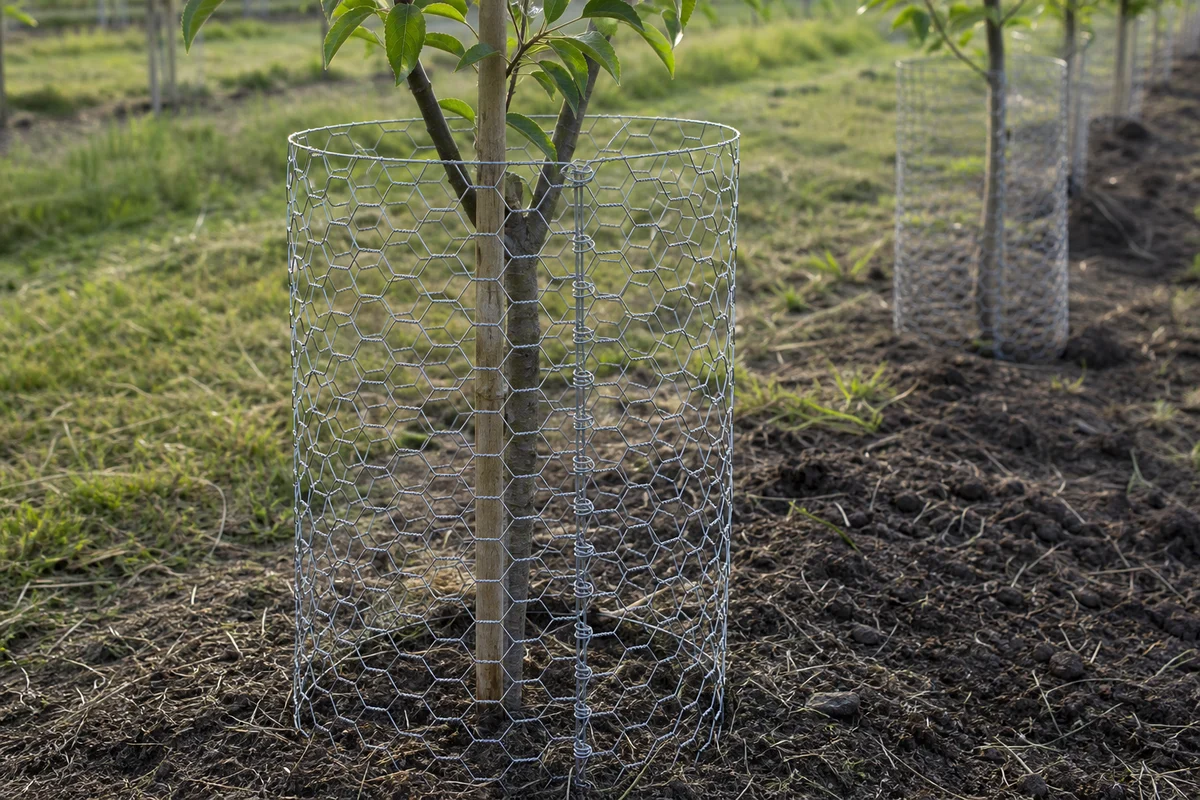
Hexagonal wire mesh is formed by twisting wire into repeated six-sided openings. The structure is flexible, so it is commonly supplied as a roll rather than as a fixed panel. That flexibility is useful where the mesh needs to run along timber posts, turn around a garden bed, form a cylindrical tree guard, or cover a simple frame. It also means the installed result depends on the supporting posts, fastening method, overlap, tension, and finished edges at the site.
When comparing offers, do not describe the material only as “wire fence” or “garden mesh.” Confirm that the required pattern is twisted hexagonal wire netting. If the project calls for a square opening, a welded panel, a diamond chain link pattern, or a rigid fabricated barrier, it is a different product form and should be reviewed separately.
Match the opening and wire diameter to the use
The opening controls what the mesh can retain or exclude and how the finished enclosure will look. A smaller opening may be preferred where finer containment or lighter pest exclusion is required, while a larger opening can suit simpler boundary or support applications. Wire diameter affects handling, shape retention, and the practical strength of the installed mesh. Both points need to be considered with the support spacing and actual use, rather than selected from a product photo alone.
For a poultry or garden enclosure, describe the type of enclosure, the expected opening size, finished height, post spacing, and whether the mesh is intended for sides, a low top cover, or a protected planting zone. For tree protection, include the desired guard diameter and height, the overlap or seam method, and whether a stake or other support will be used. The galvanized hexagonal wire mesh roll product page is a useful product reference when preparing these details.
Specify the galvanized finish and exposed conditions
Galvanized wire netting is commonly selected where a metallic coated finish is required for outdoor garden, farm, or general light-protection work. The inquiry should state that galvanized finish is required and describe the exposure: sheltered or fully outdoor, contact with soil, irrigation, regular washdown, coastal conditions, or another relevant environment. This allows the finish requirement to be considered alongside the wire and mesh specification.
Do not assume that all metallic wire netting has the same coating arrangement. If the project requires a particular coating process, corrosion-performance target, or a PVC-coated alternative, include that requirement explicitly. For applications that call for a colored coated mesh, the PVC-coated hexagonal wire mesh roll for chicken coop page can be used as a separate comparison reference; it should not be substituted into a galvanized-only request without confirming the finish.
Plan the roll dimensions and site cutting
Roll width and roll length determine how many joints, overlaps, and cuts are needed on site. Before requesting a quotation, calculate the finished fence length, height, overlaps, returns at posts, gates or frame details, and a reasonable allowance for trimming. For a tree guard or small enclosure, confirm whether the roll will be cut into repeated pieces and what finished dimensions are required after overlap.
Edge finish is also worth confirming. A cut edge can need to be folded, tied, fixed to a frame, or otherwise finished according to the installation. If the mesh is being fixed to timber posts, steel posts, or a fabricated frame, state the fastening method and support spacing. These details make the quotation more useful and help the buyer plan the installation without treating the mesh roll as a finished fence system by itself.
Keep packing and roll handling practical
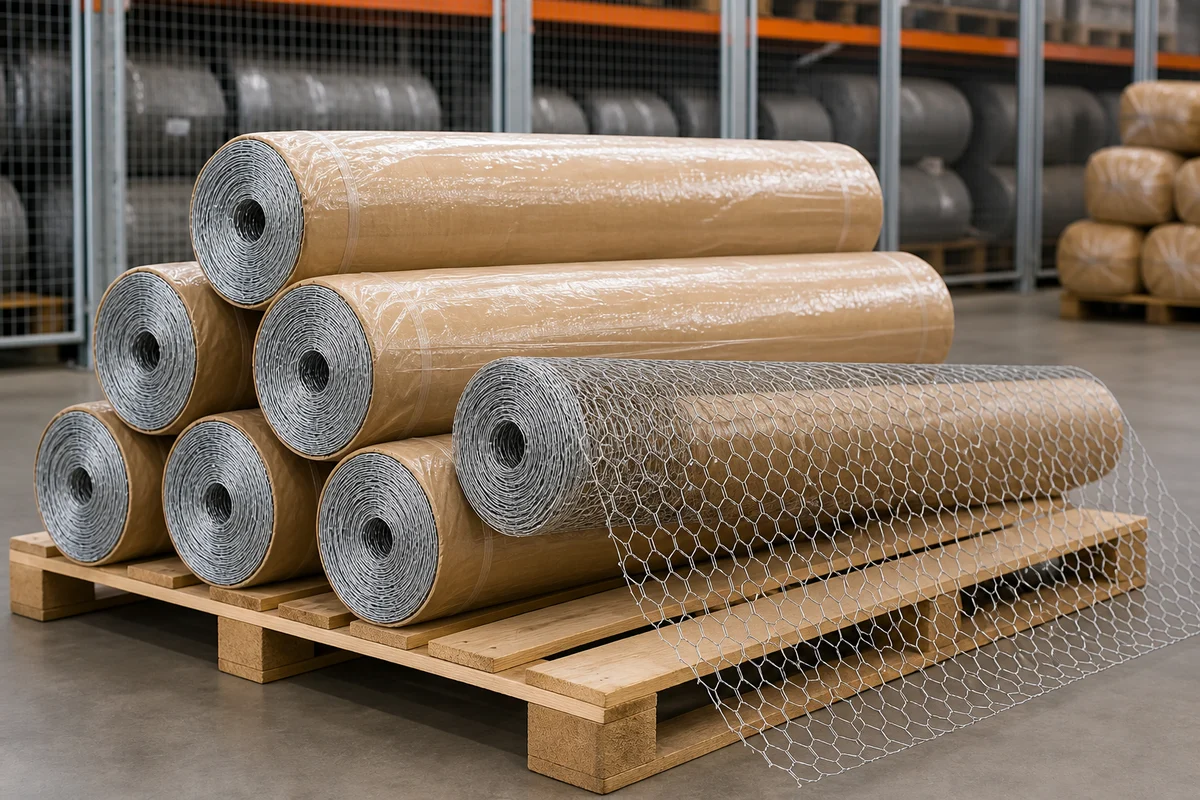
Galvanized hexagonal wire mesh is normally packed and shipped as rolls, so roll quantity, roll dimensions, protective wrapping, pallet requirement, destination, and unloading conditions should be included in the order brief. If multiple opening sizes or roll widths are ordered together, ask for each specification to be kept identifiable in the packing list and loading plan. This is helpful when the shipment will be distributed across different garden, farm, orchard, or enclosure locations.
What to include in a quote request
- Application: garden enclosure, poultry area, tree guard, planting protection, or another defined light-protection use.
- Twisted hexagonal opening size and required wire diameter.
- Galvanized finish requirement and relevant outdoor exposure conditions.
- Roll width, roll length, finished cut pieces, and total quantity.
- Edge treatment, overlap, fastening method, and supporting-post arrangement where applicable.
- Packing preference, destination, requested documentation, and unloading conditions.
The general wire mesh importer buying checklist can help organize the quantity, packing, destination, and inspection information for a broader order. For a galvanized hexagonal mesh request, send the intended application, required opening, wire diameter, roll dimensions, quantity, and destination through the Anping Mesh Factory contact page for a specification-based review.