
For an aviary, the mesh is both a visible boundary and part of a complete enclosure. Stainless steel cable mesh offers an open diamond pattern that can keep planting and the interior visible. Its flexible construction also makes panel geometry and edge connections important: ordering only a total square-metre quantity leaves several questions unresolved.
Our stainless steel cable mesh provides the product reference for this guide. The illustrated form uses stranded cables joined by small metal ferrules to create diamond-shaped openings. This article explains how to prepare an aviary enquiry around that construction, rather than treating it as rigid welded mesh. Final suitability must be reviewed for the intended birds and the complete enclosure design.
Start with the enclosure brief, not a catalogue aperture
List the intended species, life stages and management arrangements before selecting a mesh opening. The enclosure operator and an appropriately qualified animal-care specialist should assess escape, entrapment and contact risks. A specification suitable for one bird or one area is not automatically suitable for smaller birds, juveniles or a mixed-species collection. A catalogue dimension is not an animal-suitability approval.
Also identify what the boundary is expected to exclude. The design brief may need to address outside wildlife, public contact or access to feeding areas. Do not assume that selecting a stronger cable solves an opening-size problem, or that selecting a smaller opening proves the whole structure is secure. Mesh choice, adjoining surfaces, door gaps and the operating procedure need to be reviewed together.
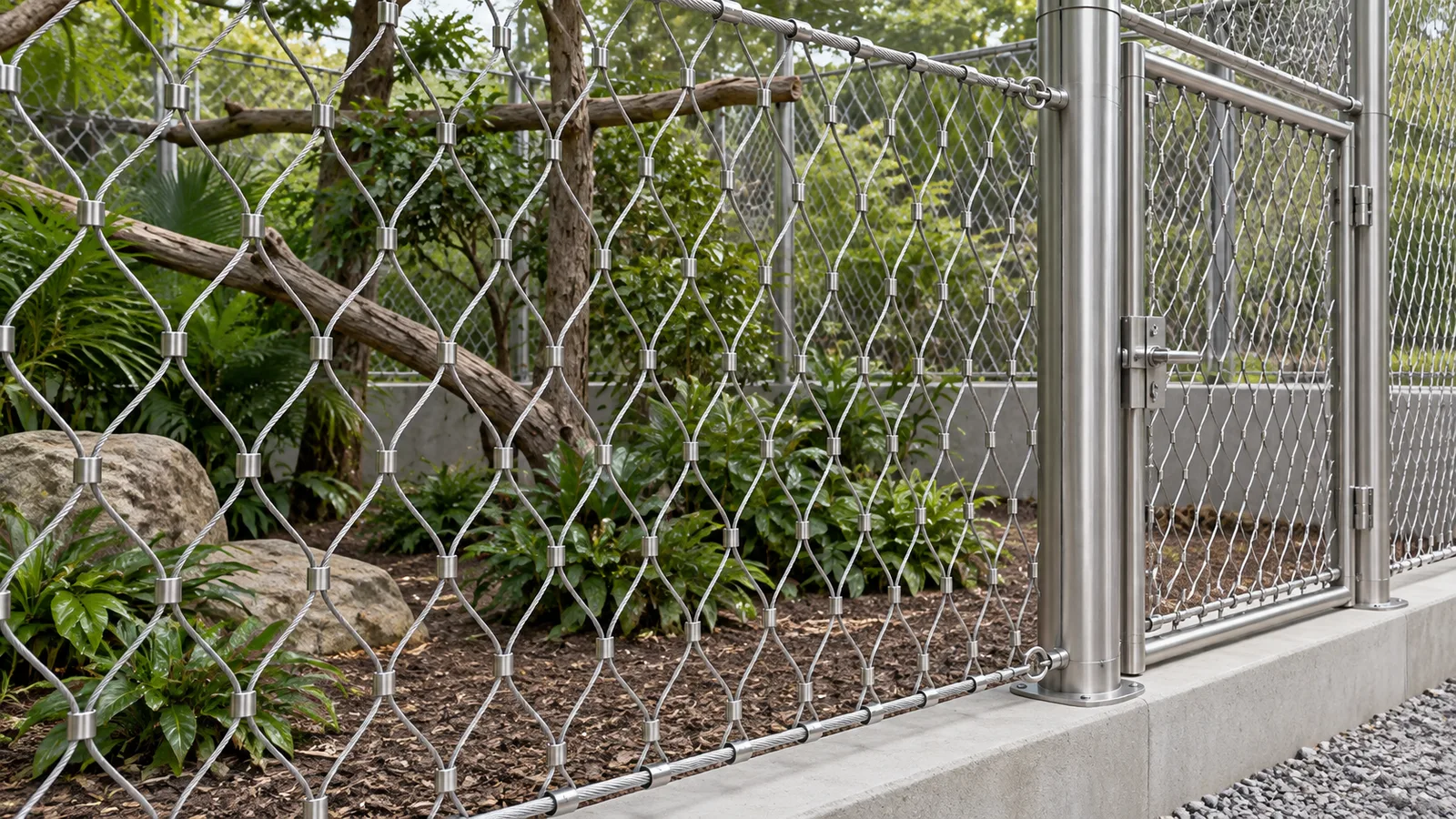
Define how the diamond opening is measured
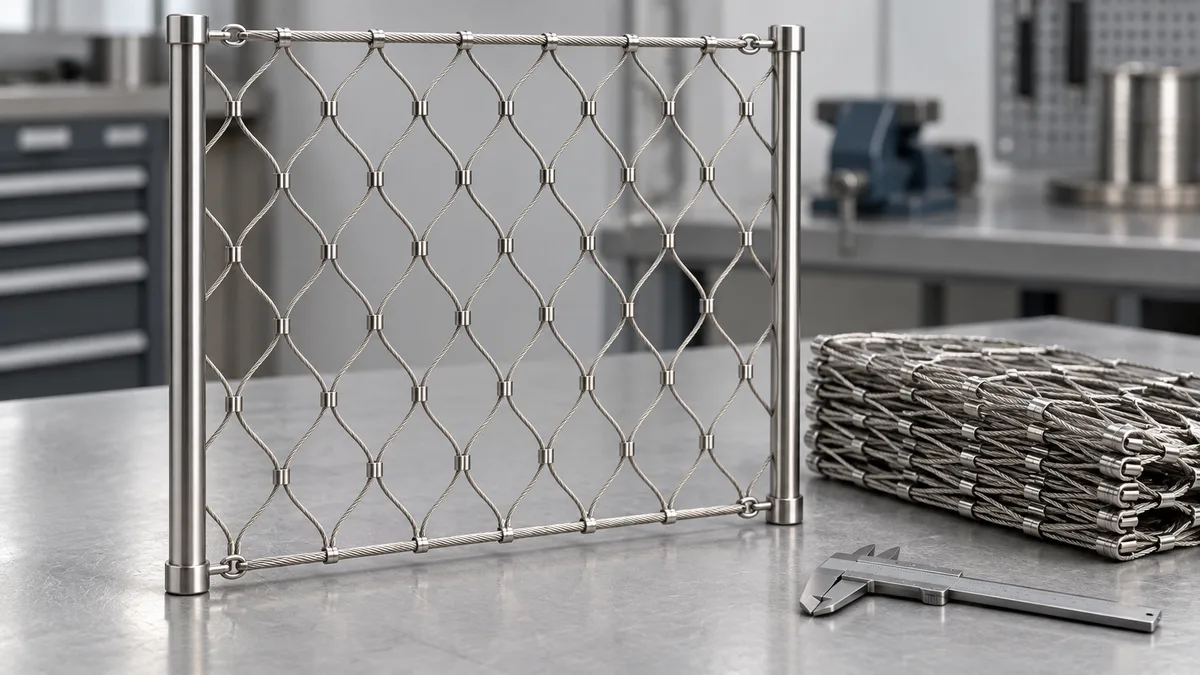
Flexible diamond mesh changes shape as its installation geometry changes. For purchasing, agree the measurement convention and the condition in which the mesh is measured. A dimension across the clear opening is not the same as a centre-to-centre dimension between cables or sleeves. A loose bundle also does not provide a useful picture of the final panel dimensions.
Request a small annotated drawing showing the opening measurement, diamond orientation, cable diameter and finished panel dimensions. Ask the supplier to identify the intended installed geometry rather than comparing unlabelled numbers from different quotations. Include cable construction and ferrule type in the approved specification when these are relevant to the design.
A physical sample helps buyers compare visibility, cable texture, sleeve appearance and handling. Keep the accepted sample identified against the order. It does not replace structural calculations or animal-care review, but it gives the buyer and supplier a common reference for the product being supplied.
Separate wall panels, roof areas and irregular boundaries
Prepare an elevation or layout with a reference for every panel. Record the finished boundary dimensions, quantity, mesh direction and adjoining support. Identify sloping sides, corners, changes in height and openings separately. For irregular panels, supply a dimensioned drawing rather than estimating from a photograph.
Roof mesh should be treated as a separate design area. The structural designer needs to consider the applicable loads, supporting structure, cable forces, deflection and anchors. A wall-panel detail cannot simply be copied overhead. Where the enclosure meets a building or landscaped boundary, show the actual connection location and any restrictions on drilling or attachment.
A useful purchase schedule might separate regular wall bays, a shaped end bay, roof sections and a service-gate infill. Even if they use the same mesh construction, they should remain identifiable for packing and installation. Ask whether panels arrive ready to fit or require approved site assembly, and make that scope explicit in the quotation.
Specify the perimeter as carefully as the mesh
The perimeter transfers forces from the net to its supporting system. Ask for a connection detail showing the mesh edge, border cable or frame, connectors and supporting member. Agree which components are included and which are supplied by the installer. Do not select anchors or post sizes from an application photograph.
Check how the boundary closes at ground level, at corners and around service penetrations. A panel with an appropriate internal opening can still leave an unsuitable gap at its perimeter. Ask the project team to define acceptable boundary clearances and the inspection method. Cable ends and fittings should be detailed so that exposed sharp projections are not left within contact areas.
For a different application of the same material family, our stainless steel rope mesh railing guide discusses architectural infill. Railing requirements and aviary requirements are not interchangeable; specify the actual use when requesting a quote.
Include access and maintenance in the drawing
Show service doors before the panel schedule is finalised. Record clear opening dimensions, swing direction, threshold arrangement and the door-to-frame interface. The operator should decide whether a controlled double-door entrance or another escape-prevention arrangement is required. Mesh supply alone does not establish an effective entrance procedure.
Consider how feeding equipment, cleaning tools and replacement planting will enter the enclosure. Identify any removable panel and its refitting method. Put the access requirements on the same drawing used to order the surrounding mesh so a later doorway change does not leave an awkward strip or unplanned joint.
Agree an inspection and maintenance plan for the finished assembly with its designer and operator. Accessible checks can include damaged strands, displaced or damaged sleeves, loose connections, corrosion and changes in perimeter gaps. Follow the approved repair method rather than improvising a patch or changing the installed tension.
Confirm material, supply scope and receiving checks
A silver finish does not identify a stainless steel grade. Confirm the material required for the site's exposure and cleaning regime, along with any material documentation needed for the order. Specify cables, sleeves and separate fittings individually where their requirements differ. Do not infer a corrosion warranty or service life from a product photograph.
At receipt, match panel references and quantities to the packing list. Check for handling damage and compare the supplied construction and edge details with the approved sample and drawings. Follow the supplier's unpacking and installation instructions; avoid unapproved cutting or modifications before discrepancies are resolved.
A practical aviary mesh enquiry checklist
- Enclosure purpose, intended birds and the responsible team's approved containment requirements.
- Site layout, panel references, quantities, boundary dimensions and separate wall or roof locations.
- Opening definition, measurement condition, diamond orientation, cable diameter and construction.
- Material requirements, ferrule form, edge detail and the scope of cables, frames and fittings.
- Door openings, removable sections, installation responsibilities and required drawings.
- Sample approval, inspection documents, packing sequence and delivery destination.
Send your panel layout and specification through our contact page. We can review the requested cable mesh and supply scope for quotation, with the final product details confirmed against your approved enclosure requirements.