
Galvanized welded wire mesh panels are rigid flat grids made from straight horizontal and vertical wires joined at their intersections. The square or rectangular openings, defined panel edges, and welded crossings make this format different from a rolled chain link fabric, hexagonal poultry netting, or a woven screen. For a garden, orchard, nursery, or light farm enclosure, the panel should be selected as part of a complete boundary arrangement: mesh panel, posts, clips or brackets, gate interface, ground condition, and the required level of access control.
A useful quotation starts with the intended enclosure rather than only a photograph. State whether the mesh is intended to mark an orchard row, protect a garden area, divide a farm work zone, or form another light-duty perimeter. Then provide the opening, wire diameter, panel height and width, required quantity, support-post preference, any gate locations, finish requirement, packing request, and delivery destination. Those details let the proposed mesh and support arrangement be checked against the actual layout.
Why choose welded panels for a defined enclosure line
Unlike flexible fence fabric supplied from a roll, a welded panel has a fixed rectangular shape. This can make panel-to-post spacing, corner changes, and gate-adjacent sections easier to plan from a drawing. It also means that finished panel dimensions matter: a panel that has the right opening but the wrong width, height, or edge arrangement can complicate installation. Confirm the finished panel size, not just the size of one mesh opening.
The wire mesh fence range provides a starting point for comparing mesh forms. For a diamond-pattern fabric that is tensioned between posts, see the chain link fence guide. Chain link and welded panels should not be treated as interchangeable: their construction, fittings, tensioning method, and finished appearance differ.
Specify the opening and wire diameter together
Opening size affects what can pass through the fence, the visual density of the grid, the panel weight, and the number of welded intersections. Wire diameter affects rigidity, handling weight, and the relationship between the nominal opening and the clear opening. A request for a small square mesh without a wire diameter is incomplete; so is a wire diameter request without the intended opening and panel dimensions.
Use the same measuring unit throughout the RFQ and identify any tolerance or measurement method that matters to the project. If the fence must limit access by a specific animal, protect plants, or work with existing posts, include that requirement in writing. The project specification should determine the required opening and wire, rather than a generic image or an assumed use.
Finish and service conditions
Galvanizing adds a zinc coating to the steel wire, but the right finish for an enclosure still depends on the actual environment, expected handling, ground contact, cleaning practices, and project requirement. State the requested galvanized finish and any agreed coating or inspection requirement before production. Avoid making a material decision solely from a product name: service exposure and the purchaser's specification control the finished requirement.
Where posts, clamps, brackets, or fasteners are included in the enquiry, identify their material and finish as well. A mesh panel, its clips, and its support posts are exposed as one installed system. Confirming all three helps avoid receiving components with an unsuitable combination of sizes or finishes.
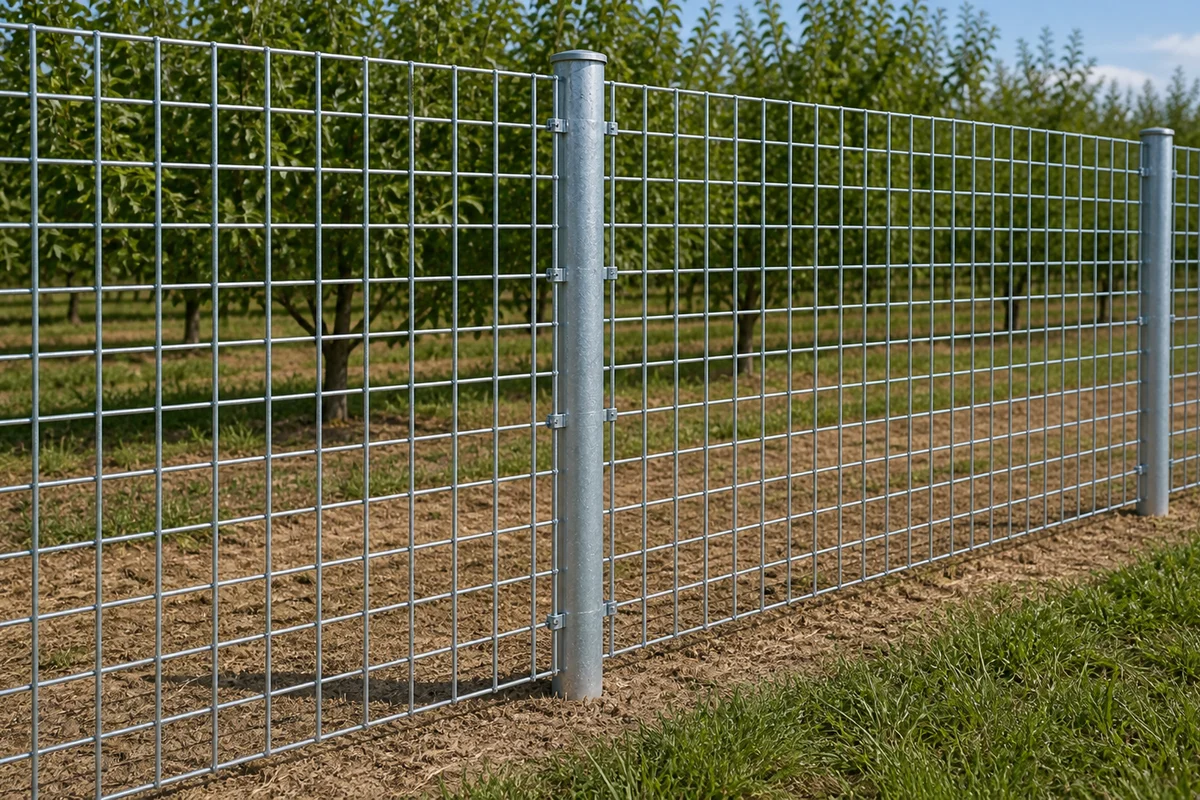
Plan the panel-to-post interface before ordering
For a panel enclosure, the post line is not an afterthought. The layout should identify line posts, corner posts, end posts, changes in direction, slopes, and gate openings. Confirm the panel width against the planned post centres, allowing for the actual brackets or clips. At corners and gates, the installer may need a different post section, brace, or fitting arrangement from that used on a straight run.
Send a simple layout, site dimensions, or marked photograph when the enclosure includes irregular boundaries or several gate locations. It is better to separate the quantities for standard panels, cut panels, corners, and gates than to combine all mesh in one undefined total. For a wider industrial perimeter comparison, the industrial welded mesh panel guide covers a separate buying situation; the final specification should still match the required site and access conditions.
Handling, cut sections, and gate areas
Panels are normally handled as rigid flat units. Confirm whether the project needs full panels only, cut sections for the final bay, or a coordinated gate infill. If panels must be cut on site, the installer should consider the resulting edge, the intended fixing points, and any required treatment of exposed steel. Do not assume that a standard full panel will fit every last bay without checking the layout.
For a gate opening, state the clear opening, gate type, hinge side, latch side, and the relationship between the gate posts and the adjacent mesh panels. The supplier can quote mesh more accurately when the gate is treated as a named part of the enclosure rather than an unstated future modification.
Inspection and export packing
Inspection should follow the confirmed order. Typical checks include mesh construction, nominal opening, wire diameter, finished panel length and height, panel straightness where agreed, welded intersections, surface condition, quantity, packing marks, and accessory count. If the project requires pre-shipment evidence, request the agreed measurement photographs, packing list, panel schedule, and any documents before production is completed.
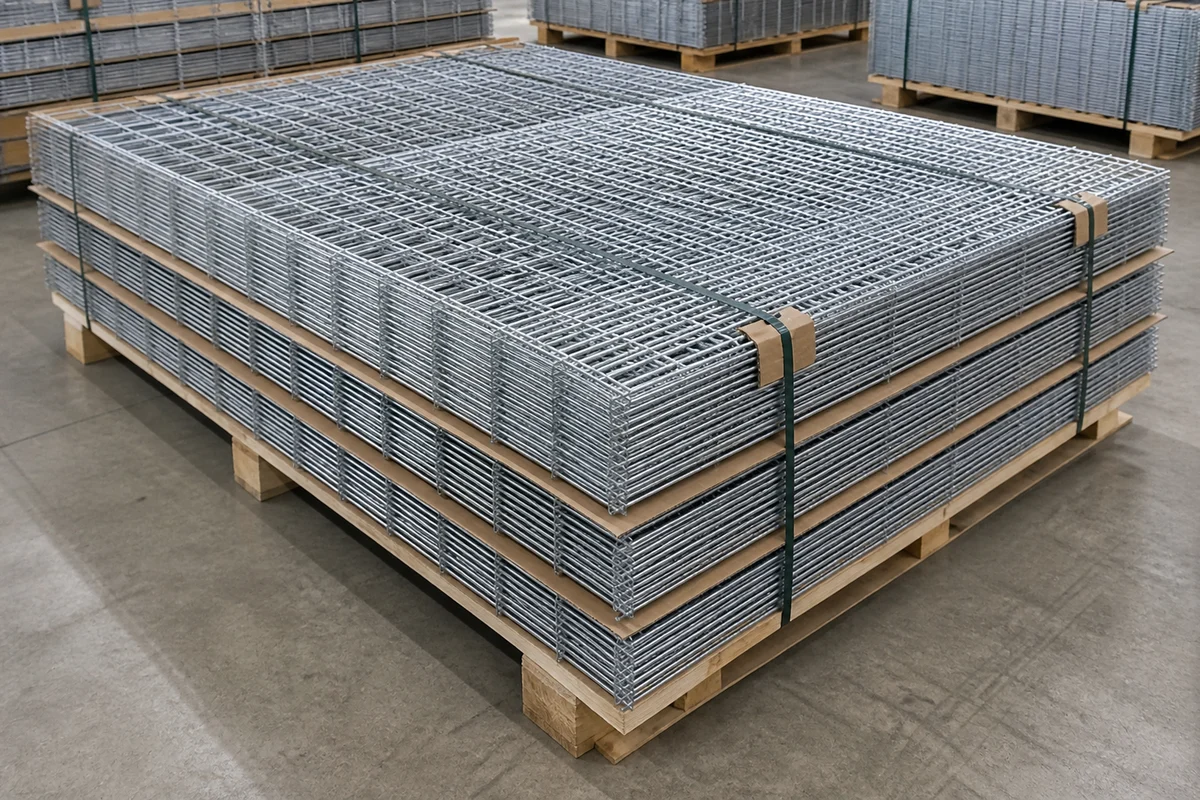
Panel packing should protect edges and limit movement during handling. Depending on the size, quantity, shipment method, and loading plan, panels may be separated, bundled, palletized, or crated. The packing method should match the actual panel schedule, especially when different dimensions or fittings are included in the same shipment.
RFQ checklist for galvanized welded mesh panels
- Enclosure application, site layout, boundary length, and any gate or corner locations.
- Required welded wire construction, nominal opening, wire diameter, and specified galvanized finish.
- Finished panel height, width, quantity by size, and any cut-panel requirement.
- Post, clip, bracket, fastener, and gate interface requirements where they are part of the order.
- Inspection points, requested pre-shipment evidence, packing method, destination, and delivery preference.
Send the layout, required mesh details, finished panel sizes, quantity, accessory requirements, packing request, and destination through the Anping Mesh Factory contact page. A complete RFQ makes it possible to quote the full enclosure requirement instead of an assumed panel configuration.