
Galvanized welded wire mesh fence panels are a practical choice for industrial perimeter projects that need a defined flat panel-and-post arrangement. The panel is made from straight galvanized steel wires welded at their intersections to form a rectangular grid. It is supplied as a panel component, then combined with posts, clamps or brackets, bolts, foundations, corners, end conditions, and sometimes gates according to the site layout.
A product photograph alone is not enough to specify a complete perimeter fence. Panel height and width, mesh opening, wire diameter, galvanized finish, post section, fixing arrangement, ground condition, gate positions, quantity, packing, and delivery destination should be reviewed together. The project drawing, site requirements, and local construction rules should determine the finished system.
What a welded mesh fence panel provides
A flat welded mesh panel creates a visible boundary while retaining airflow and sight lines. In an industrial setting it may be considered around warehouse yards, service roads, storage areas, equipment zones, utility boundaries, and other managed spaces where the project calls for a rigid wire-mesh panel system. The panel itself is one part of the finished fence, not a replacement for the posts, foundations, access-control plan, or site-security assessment.
The direct product reference is the galvanized welded wire mesh fence panel product page. For a useful enquiry, provide the panel schedule and site drawing instead of requesting only “galvanized fence mesh.” This lets the panel dimensions, mesh construction, support posts, and required fittings be checked against the intended layout.
Start with the perimeter layout
Measure the fence line before selecting a panel format. A complete layout normally identifies straight runs, corners, ends, changes in direction, changes in level, service openings, and gate locations. A site with slopes or irregular boundaries can require different post positions or panel treatments from a level rectangular yard. Where a drawing includes a curb, retaining edge, or separate foundation detail, that information should be included with the RFQ.
It is helpful to divide the project into a panel schedule: each run, its required height, the number of panels, post locations, and any special connection. This avoids treating every part of the boundary as the same item when the plan actually includes corner posts, end posts, double runs, or openings. The wire mesh fence product range gives broader context, but each order should remain tied to the confirmed project arrangement.
Confirm panel construction before quoting
Mesh opening and wire diameter should always be specified together. The opening defines the rectangular grid; the wire diameter contributes to the panel weight, stiffness, and handling. Finished panel width and height affect loading, post spacing, and installation planning. The galvanized finish should be described as required by the project, rather than assumed from a generic product name.
Also state whether the panel needs trimmed edges, a particular border detail, or a defined direction for the wires. If a sample, drawing, bill of quantities, or project specification exists, send it with the request. This allows the supplier and buyer to compare the requested mesh format with the actual construction requirement without relying on an approximate visual match.
Posts and fittings are part of the order
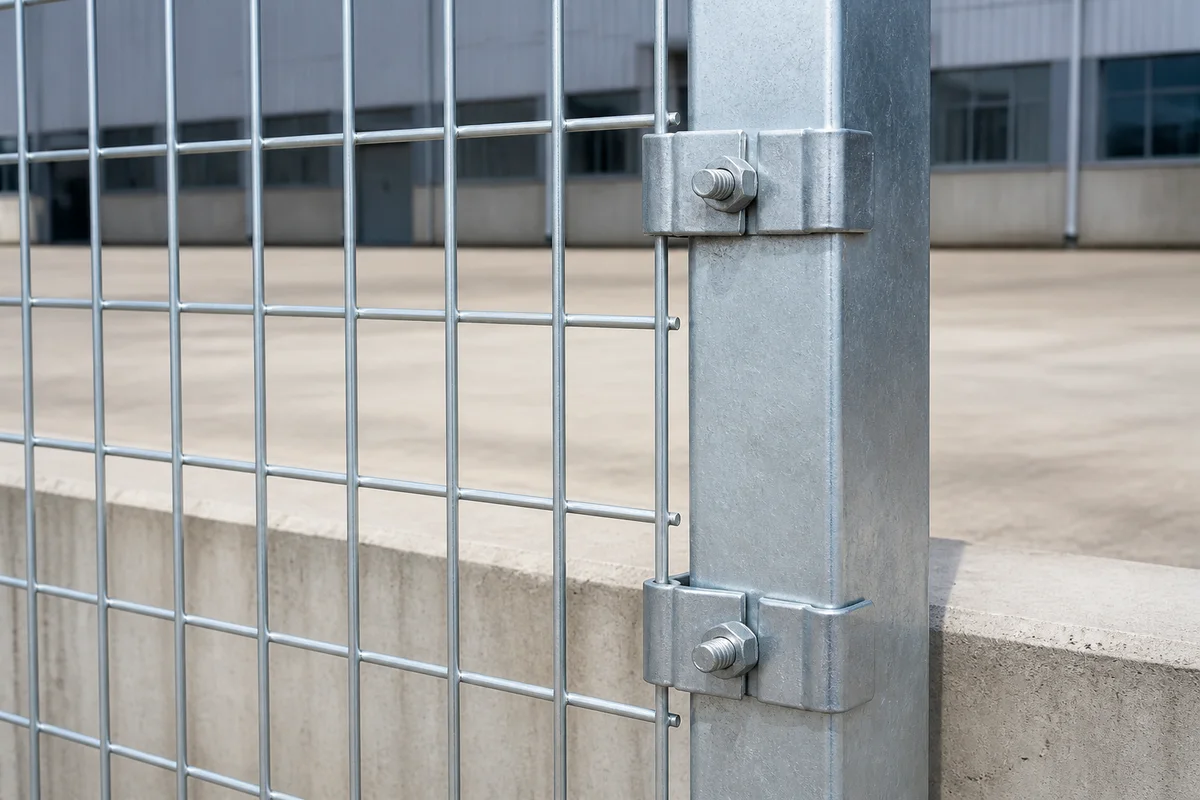
A panel fence is installed through its posts and fittings. A clear enquiry should identify whether square or rectangular galvanized posts are required, the post section and length specified by the drawing, the base or embedment detail, and the required clamp brackets, bolts, caps, corner fittings, and end fittings. The final arrangement depends on the panel format and the project foundation design.
Do not assume that a panel can use the same connection detail at every point on the boundary. A straight run, a 90-degree corner, a terminal post, and a gate opening can need different components. Ask for a component list or drawing reference when the project needs posts and hardware supplied together. That makes it possible to pack the matching accessories with the panels and check quantities before dispatch.
Choose the correct fence format for the use case
Welded panels are commonly selected when a project calls for flat rigid sections and a defined post layout. A flexible roll-fence system is a different product format. For example, projects that need a green-coated roll fence for a long, continuous boundary can compare the requirements in the PVC coated chain link fence guide. The mesh construction, tensioning method, fittings, and installation sequence are not interchangeable with a welded panel system.
Likewise, a perimeter panel should not be described as a complete access-control or intrusion-protection solution without a project-specific assessment. The necessary fence height, gate arrangement, lighting, monitoring, clearance zones, and foundation details are decisions for the site owner, designer, and relevant project team. The supplier's role is to provide the confirmed mesh panels and associated hardware to the agreed product specification.
Inspection and packing for flat panels
Before packing, inspect the confirmed order details: panel dimensions, mesh opening, wire diameter, welded-joint appearance, galvanized surface condition, panel flatness, post quantities, fitting quantities, and packing marks. When pre-shipment evidence is required, request measurement photographs, bundle counts, component photographs, and packing-list references before loading.
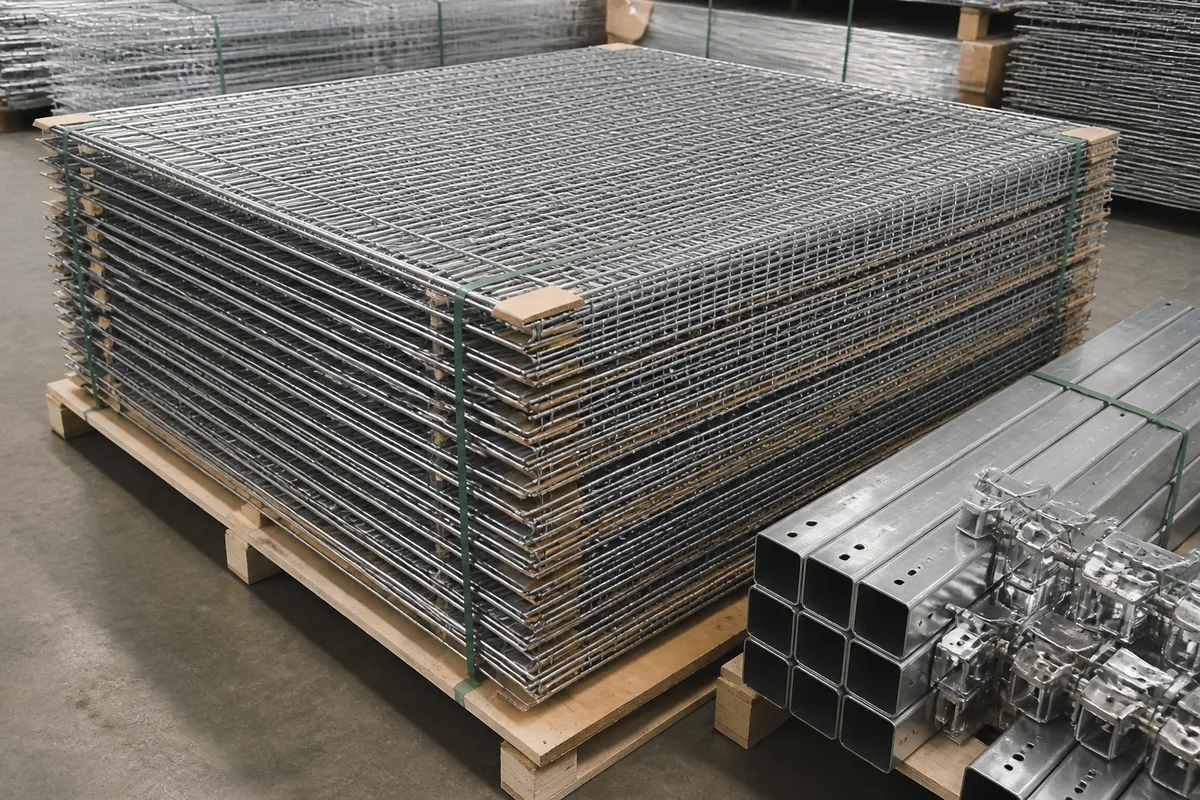
Flat panels should be stacked on suitable supports with protection between faces or edges where the order requires it. Posts and fittings should be bundled separately and identified against the component list. For mixed panel sizes, divide the shipment into clear bundles so the receiving team can match each bundle to the fence schedule. Packing method, labels, container type, destination, and any loading restrictions should be agreed before dispatch.
RFQ checklist for galvanized welded fence panels
- Site use and perimeter drawing, including straight runs, corners, ends, slopes, and gate openings.
- Required panel height, panel width, mesh opening, wire diameter, and galvanized finish.
- Panel quantity and a schedule for any different panel sizes or boundary sections.
- Post section, post length, base or foundation reference, and the required clamps, bolts, caps, and corner or end fittings.
- Inspection evidence, packing method, labels, destination, and container-loading requirements.
The wire mesh importer buying checklist can help organise the basic product and shipment data. Send the panel schedule, layout drawing, mesh specification, component list, quantity, packing request, and destination through the Anping Mesh Factory contact page for a quotation based on the actual perimeter project.