
304 stainless steel crimped wire mesh is a rigid woven screen made from wires that are formed with a pre-crimp before weaving. The crimped intersections lock the wires into a stable open pattern, giving the panel a different structure from welded wire mesh, fine plain-weave filter cloth, perforated metal, or expanded metal. This product format is commonly considered for screen decks, grading equipment, protective screens, and other screening assemblies where the machine design calls for a woven, crimped panel.
The product name alone does not define a usable screen panel. For a quotation, buyers should provide the intended material to be screened, the required opening, wire diameter, screen-panel dimensions, edge or hook detail, deck interface, quantity, packing requirement, and destination. The equipment drawing and the responsible process specification determine whether 304 stainless steel is the appropriate material for the actual service conditions.
What makes crimped woven wire mesh different
In crimped wire mesh, each wire is shaped before it is interlaced. The resulting bends help maintain the opening and support the woven construction under normal handling and installation. Depending on the requested opening, wire diameter, and weave arrangement, the finished screen can be supplied as a cut panel or prepared to match a specified screen-deck arrangement. The supplied mesh should be described by its construction rather than treated as a generic stainless screen.
The 304 stainless steel crimped wire mesh product page is the direct catalogue reference for this construction. Confirm the requested woven and crimped structure with the product drawing, because a welded grid uses joined crossings and may require a different specification, fabrication method, and interface with the screen frame.
Start with the screening duty
The first question is what the panel needs to separate, retain, or protect. Opening size should be defined in the same unit used by the equipment team, with the required tolerance where relevant. Wire diameter affects the clear opening, panel weight, rigidity, and wear allowance, so it must be reviewed together with the opening. A nominal opening without a wire diameter is not a complete screen specification.
Buyers should also state whether the panel is for a vibrating screen deck, a fixed guard, a grading tray, or another defined machine component. Screen inclination, support-bar spacing, feed condition, tension method, and access for replacement can all affect the required panel preparation. For a broader view of available formats, see the mining and quarry screen mesh range; the final order should remain based on the actual machine layout and approved dimensions.
304 stainless steel: specify the grade, then review the service
304 stainless steel is a commonly requested grade for screen projects, but it should not be selected from a photograph or a product title alone. The operating environment, material being handled, moisture exposure, cleaning method, temperature, wear condition, and project requirement may affect the material decision. State the requested grade in the RFQ and provide any agreed material-document, traceability, or inspection requirement before production.
When a screening application requires a different balance of wear resistance, hardness, or cost, another specified material may be considered by the project team. For comparison, the 65Mn hooked vibrating screen mesh guide covers a separate manganese-steel screen format used for quarry and aggregate projects. It is not a substitute for a stainless crimped panel, and material grades should not be interchanged without confirming the machine duty and purchasing specification.

Panel size, edge preparation, and screen-frame fitment
A flat cut panel, a panel with formed edges, and a hooked screen can all use woven wire construction, but they do not share the same installation details. The buyer should provide the finished length and width, the active screening area, the direction of the crimped wires where relevant, the supporting surface, and the requested edge treatment. Include a drawing or a clear sketch when the screen must seat in a recessed frame, fit under clamp bars, or connect to an existing tensioning system.
State whether the order requires loose panels, matched replacement panels, or panels prepared for a specific machine schedule. It is useful to identify each size and quantity separately rather than combining different openings or dimensions in one line item. The stainless steel wire mesh category provides related product formats for comparison, while the purchase order should identify the exact crimped screen construction and finished panel requirements.
Inspection points before export
Inspection should follow the confirmed order, not a generic sample image. Typical review points include material grade as ordered, mesh construction, nominal opening, wire diameter, panel dimensions, flatness where agreed, edge preparation, quantity, surface condition, and packing marks. If the project needs pre-shipment evidence, request measurement photographs, panel photographs, a packing list, and any material or inspection documents that have been agreed in the order.
Where several panel sizes are supplied, labels and packing references should identify the screen schedule clearly. This is especially important when replacement panels are being sent to a maintenance team that needs to match each panel to a screen deck or equipment reference after receipt.
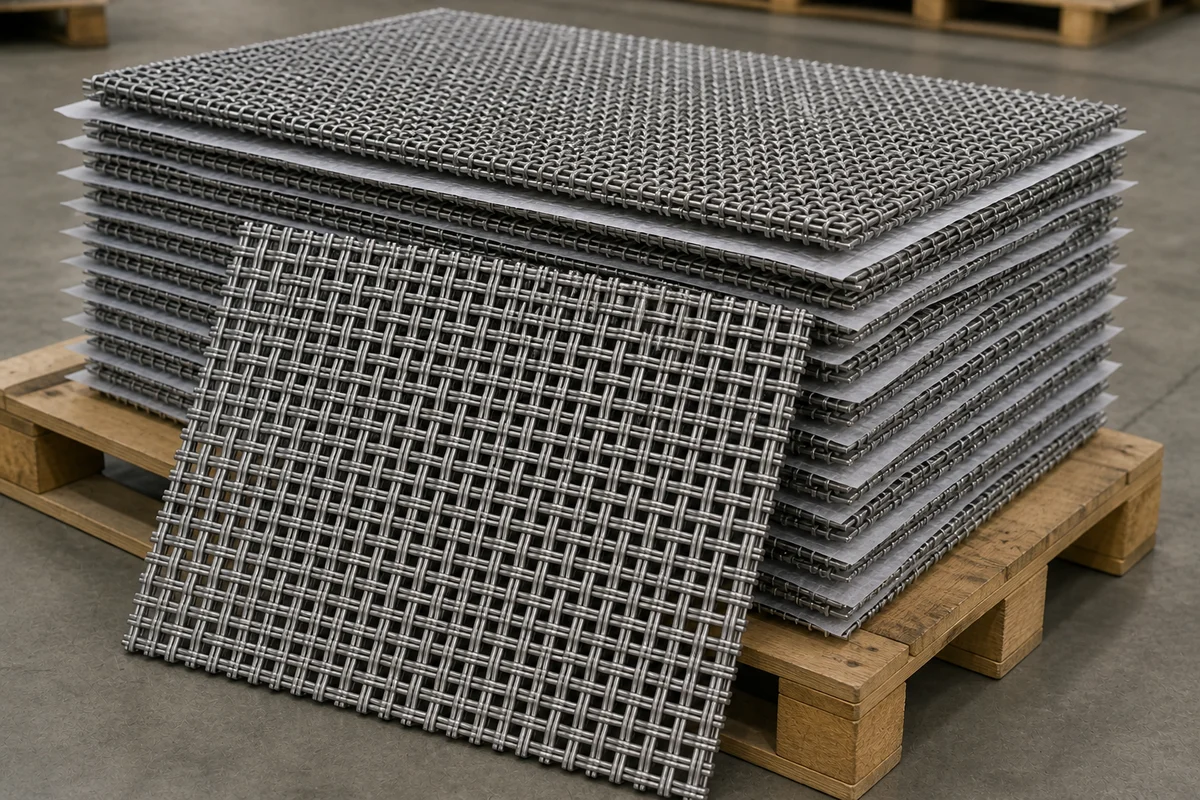
Packing and handling
Crimped woven panels should be protected from edge damage, distortion, and unnecessary abrasion during transit. The packing method depends on panel size, weight, quantity, shipment mode, and loading plan. Protective separators, bundled panels, pallets, and crates may be discussed after the dimensions and order quantity are confirmed. Do not stack incompatible panel sizes together without identifying the schedule and the orientation needed for safe unloading.
Receiving teams should keep the screen panels dry, supported, and separated until installation. Before fitting a replacement panel, compare its opening, wire diameter, overall dimensions, edge detail, and direction with the approved drawing or the panel it is intended to replace. These checks are practical controls against fitting the wrong screen to a machine deck.
RFQ checklist for stainless crimped screen panels
- Screening application, material handled, and equipment drawing or screen-deck reference.
- Required mesh construction: pre-crimped woven wire mesh, with the requested weave or crimp arrangement if specified.
- Material grade, opening, wire diameter, and any agreed tolerance or inspection condition.
- Finished panel size, active screening area, edge preparation, hook detail, and fitment method.
- Quantity by panel size, replacement-panel schedule, packing requirement, and destination.
- Required pre-shipment photographs, documents, labels, and loading preference.
Send the drawing, material requirement, mesh specification, dimensions, quantity, packing request, and destination through the Anping Mesh Factory contact page. A complete RFQ lets the quotation address the actual screen-panel interface rather than an assumed catalogue configuration.