
65Mn hooked vibrating screen mesh is a wear-focused replacement screen product used on quarry, sand, gravel, crusher, coal, and aggregate screening equipment. Unlike a general construction mesh or fence mesh, this product works inside a vibrating screen deck where material impact, abrasion, vibration, and tensioning all affect service life. A buyer should therefore specify it as a screen replacement component, not simply as “wire mesh.”
The common inquiry situation is practical: a plant has an existing vibrating screen machine, the current mesh has worn, stretched, broken near the edge, or no longer gives the target screening result, and the maintenance team needs replacement panels that fit the deck. To quote accurately, the supplier needs the material grade, opening, wire diameter, panel length and width, hook edge type, hook direction, tensioning method, quantity, and packing requirement.
What makes this product different
A vibrating screen mesh panel is exposed to repeated impact from stone, ore, gravel, sand, or mixed aggregate. The wires must keep the opening reasonably stable while the screen vibrates and while material moves across the deck. 65Mn steel is often discussed for this application because buyers want a screen material suitable for abrasive screening work, but the final selection should match the machine, feed material, particle size, moisture, deck position, and maintenance plan.
The 65Mn hooked edge vibrating screen mesh product page is the main product reference for this guide. It is relevant when the buyer needs replacement screen panels with a hooked or tensioned edge for aggregate processing equipment. For a broader quarry-screening comparison, the 65Mn crimped wire screen mesh for quarry and aggregate screening page can also be used when preparing a specification request.
Confirm opening and wire diameter together
The opening determines the intended separation size, while wire diameter affects open area, wear reserve, strength, and the behavior of the screen surface under vibration. A larger wire diameter may improve wear resistance in some abrasive conditions, but it can reduce open area and change screening efficiency. A thinner wire may increase open area but may not suit heavy impact or coarse feed. These points should be reviewed with the machine duty and the target screened product.
Do not quote a screen mesh only by the opening. Two panels with the same opening can have different wire diameters, crimp styles, open area, weight, edge construction, and service behavior. A clear RFQ should state opening size, wire diameter, panel dimensions, material grade, hook type, and the direction of material flow where relevant. If the buyer can provide an old screen sample, drawing, or clear measurement photos, it can reduce mistakes before production.
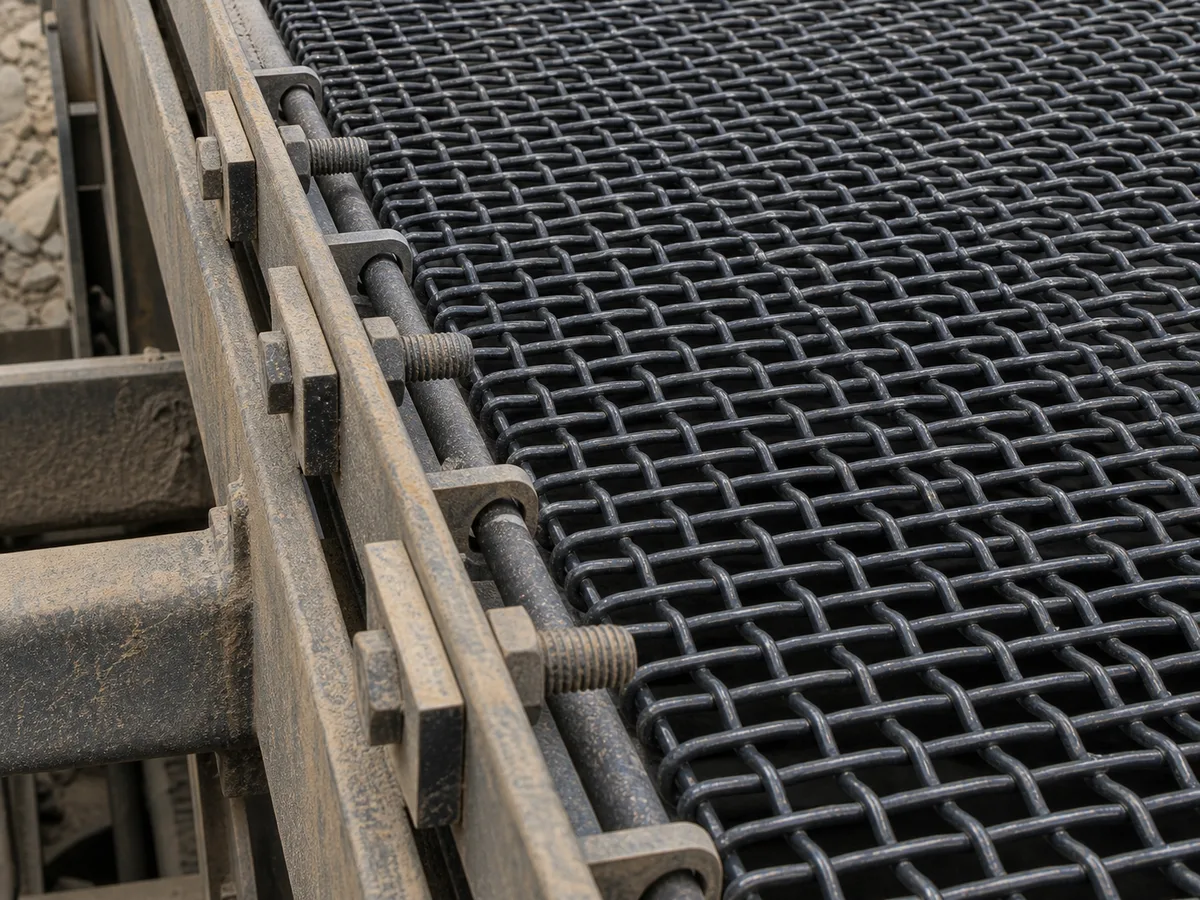
Hook edge and tensioning details are critical
Hooked edge vibrating screen mesh must fit the machine's side tensioning arrangement. The edge can be bent, reinforced, wrapped, or otherwise formed according to the deck design and the screen thickness. If the hook angle, hook depth, edge width, or hook direction is wrong, the panel may not seat correctly, may be difficult to tension, or may fail near the edge during operation.
Buyers should confirm whether the panel is tensioned from both sides, whether rubber strips or support bars are used, and whether the screen has a standard flat profile or a special reinforced edge. If the screen is replacing an old panel, measure the total finished width including hook edges, the flat screening area, the overall length, and the hook shape. Photos of the machine side rail and the old screen edge are useful for checking the installation format.
Match the mesh to feed material and deck position
A quarry plant may use several screen decks, and each deck may have a different duty. The top deck may receive larger stone and heavier impact, while lower decks may separate smaller aggregate. Wet material, clay content, angular rock, high feed volume, and abrasive mineral content can all influence the choice of wire diameter, opening, crimp profile, and replacement interval. The mesh supplier can review the stated specification, but the operating condition should be described by the plant team.
For difficult screening conditions, buyers should explain the material being processed, feed size, target output size, hourly capacity, wet or dry condition, and the current problem with the old screen. The issue may be rapid wear, pegging, blinding, wire breakage, edge cracking, loose tension, or poor separation. Each problem points to different checks, so the RFQ should include both the required dimensions and the application background.
Plan replacement, inspection, and packing
Vibrating screen mesh is often ordered as a replacement item, so downtime matters. Buyers should keep clear records of each screen deck size, opening, wire diameter, edge style, machine model, and previous service feedback. This makes reorder work faster and helps avoid mixing different panels during maintenance. For larger plants, marking the deck position or screen number on the packing list can help warehouse and maintenance teams identify the correct replacement part.
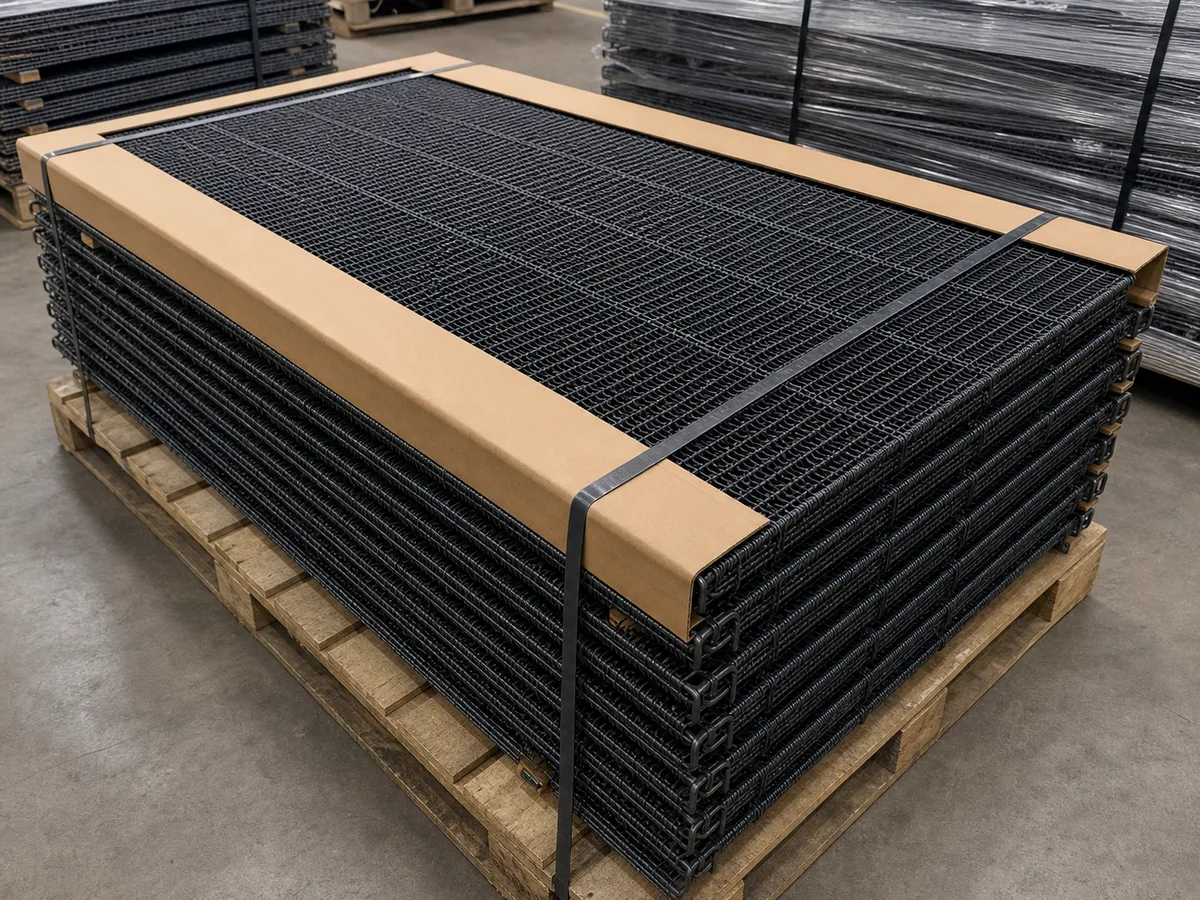
Packing should protect the mesh surface and hook edges during handling. Heavy screen panels are commonly stacked flat, secured on pallets, and protected with strips or boards at vulnerable edges. The buyer should confirm pallet size, maximum bundle weight, container loading plan, and whether mixed openings need separate labels. If the order includes several screen sizes, each bundle should be identified clearly before shipment.
RFQ checklist for 65Mn hooked vibrating screen mesh
- Application: quarry, sand, gravel, crusher plant, coal screening, aggregate processing, or other screening equipment.
- Material grade requirement, such as 65Mn steel or another specified screen material.
- Opening size, wire diameter, crimp style, and requested screen surface format.
- Finished panel length, finished panel width, flat screening area, and hook edge dimensions.
- Hook direction, hook angle, reinforcement method, and machine tensioning arrangement.
- Deck position, feed material, target screened size, wet or dry condition, and current screen problem if replacing an old panel.
- Quantity, packing method, labels, destination, loading plan, and requested inspection photos.
The mining and quarry screen mesh category can help buyers compare related screen products before choosing a replacement format. If the inquiry is part of a mixed wire mesh shipment, the general wire mesh importer buying checklist is useful for organizing quantity, packing, destination, and inspection details. For a screen replacement quotation, send the old screen measurements, machine deck photos, opening, wire diameter, hook type, quantity, and destination through the Anping Mesh Factory contact page.